
Belgium
Belgium stretches from the low North Sea coast to the wooded Ardennes near Luxembourg.
- Capital
- Brussels
- Region
- Western Europe
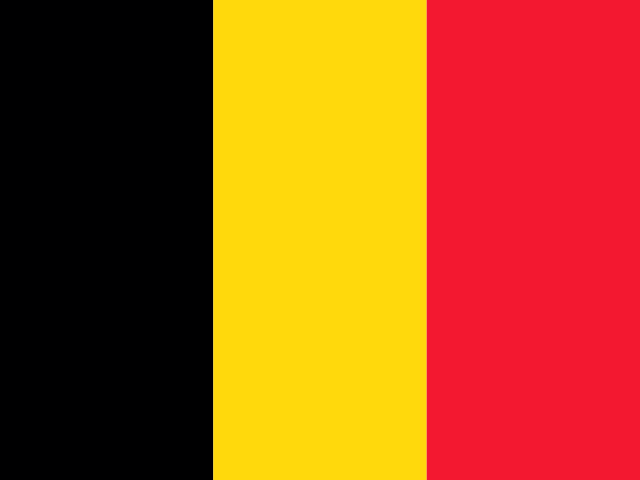
Flag of Belgium
The black, yellow and red come from the arms of the Duchy of Brabant, which featured a gold lion with red claws.
The yellow middle stripe is shared with Romania and Chad. Belgium swaps their blue at the left for black.
Languages and local life
Where the name comes from The name derives from the Belgae, an ancient Celtic tribal confederation that inhabited an area between the English Channel and the west bank of the Rhine in the first centuries B.C.
Language profile Dutch (official) 60%, French (official) 40%, German (official) less than 1%.
Currency Euro (EUR).
Food traditions
The tradition Belgian beer culture spans family breweries, brewing associations and monasteries. Beer also has a place at the table, both in cooking and in pairings chosen to complement a dish.
Beyond the glass Beer also enters the kitchen. One example is cheese washed with beer, a different use of the brewing tradition from serving a drink with a meal.
Borders and landscape
Area and borders Total area is about 30,528 km². It shares land borders with France, Germany, Luxembourg and Netherlands.
Landscape Flat coastal plains in northwest, central rolling hills, rugged mountains of Ardennes Forest in southeast.
From high to low Highest point: Botrange 694 m. Lowest point: North Sea 0 m.
A person connected to this country
What they contributed “for decisive contributions to the IceCube Neutrino Observatory and the discovery of high-energy neutrinos of astrophysical origin”
The person Francis Halzen, born in Tienen, received the 2026 Nobel Prize in Physics.
Where they worked University of Wisconsin–Madison at the time of the award.
Where it is
On the map Belgium stretches from the low North Sea coast to the wooded Ardennes near Luxembourg.
Where people live Most of the population concentrated in the northern two-thirds of the country; the southeast is more thinly populated; considered to have one of the highest population densities in the world; approximately 97% live in urban areas.