
Yemen
Yemen reaches the Bab el-Mandeb near the Red Sea entrance and includes Socotra farther out in the Arabian Sea.
- Capital
- Sana'a
- Region
- Western Asia
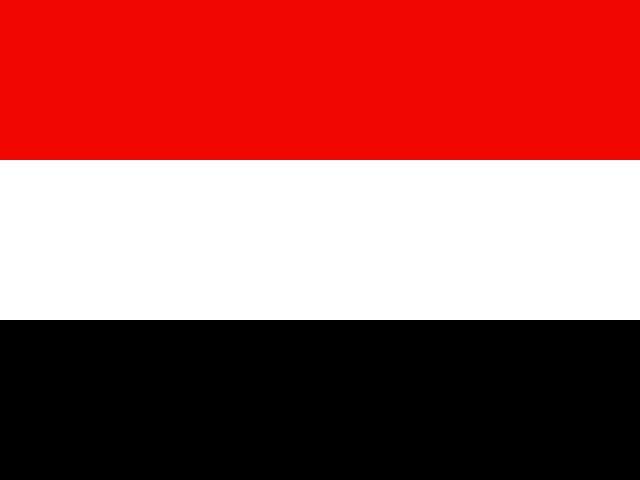
Flag of Yemen
The band colors derive from the Arab Liberation flag and represent oppression (black), overcome through bloody struggle (red), to be replaced by a bright future (white).
Take the red–white–black pattern and leave the white stripe blank. Egypt adds an eagle and Iraq adds green script.
Languages and local life
Where the name comes from Name derivation remains unclear but may come from the Arab term "yumn" (happiness) and be related to the region's classical name "Arabia Felix" (Fertile or Happy Arabia); the Romans referred to the rest of the peninsula as "Arabia Deserta" (Deserted Arabia).
Language profile Arabic (official).
Currency Yemeni rial (YER).
Food traditions
The tradition Date palms provide food, but their value extends beyond the fruit. Communities use the fronds for weaving and pass down knowledge of pollination, harvesting and other work that keeps the groves productive.
Culture in the oasis The palm thrives where water is available for irrigation. Alongside its role in crafts and food, the tree is remembered in poetry and song.
Borders and landscape
Area and borders Total area is about 527,968 km². It shares land borders with Oman and Saudi Arabia.
Landscape Narrow coastal plain backed by flat-topped hills and rugged mountains; dissected upland desert plains in center slope into the desert interior of the Arabian Peninsula.
From high to low Highest point: Jabal an Nabi Shu'ayb 3,666 m. Lowest point: Arabian Sea 0 m.
A person connected to this country
What they contributed “for their non-violent struggle for the safety of women and for women's rights to full participation in peace-building work”
The person Tawakkol Karman, born in Ta'izz, received the 2011 Nobel Prize in Peace.
Where it is
On the map Yemen reaches the Bab el-Mandeb near the Red Sea entrance and includes Socotra farther out in the Arabian Sea.
Where people live The vast majority of the population is found in the Asir Mountains (part of the larger Sarawat Mountain system), located in the far western region of the country.