
Flag of Greece
Greece’s national flag combines nine blue-and-white stripes with a white cross in the upper corner by the pole. The striped design has roots in the flags flown at sea during the Greek War of Independence.
- Height to width
- 2:3
- Maritime flag designs merged
- 1828
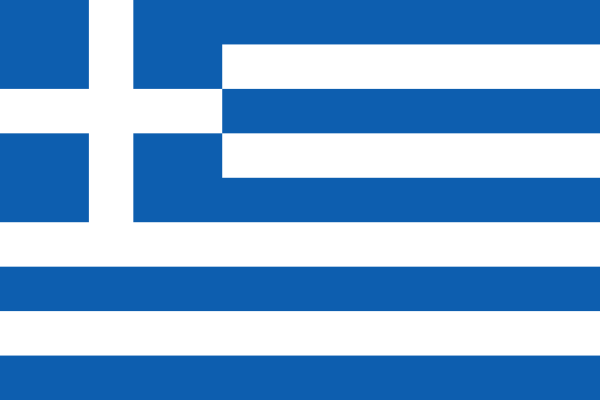
How the cross fits the stripes
Start counting at the top of the free edge and you will find five blue stripes and four white ones. Each stripe has the same width, and both the top and bottom stripes are blue. At the hoist, the corner nearest the flagpole, a blue square covers the top five stripes. The white cross fits inside that square. This allows two different patterns, a cross and a stack of stripes, to share the same two colours without crowding each other.
The Greek Ministry of Foreign Affairs associates blue with the sky and sea, white with the independence struggle and the cross with Christianity. It also relates the nine stripes to the nine syllables of Eleftheria i Thanatos, meaning “Freedom or Death”. Count the syllables of the Greek expression to see how the association works. An English translation will give you a different count.
From an independence-era ensign to the national flag
Early independent Greece used more than one design. The first land flag was a white cross on a blue background. The flags flown at sea were much closer to the modern striped design. The Greek presidency describes navy and merchant variants that could be distinguished by their corner crosses. In 1828 the two maritime patterns were merged in recognition of the merchant fleet’s role in the War of Independence.
Political changes left marks on subsequent flags. The presidency records that the Bavarian coat of arms appeared on army and navy flags during King Otto’s reign, and that a crown was introduced on flags under King George I. The familiar blue and white scheme outlasted those additions. Today the navy’s war flag has the same design as the national flag. Seeing a simple white cross spanning the entire field in an old photograph can therefore point to a different use or period.
Greece, Finland and Uruguay
-
GreeceWhite cross in a blue corner 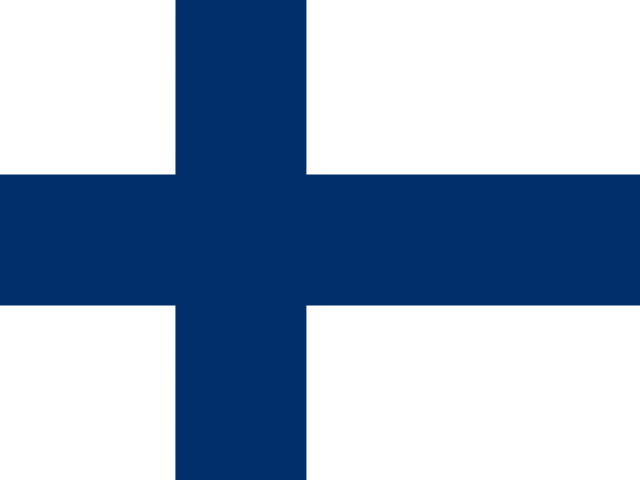
FinlandBlue cross spans the flag 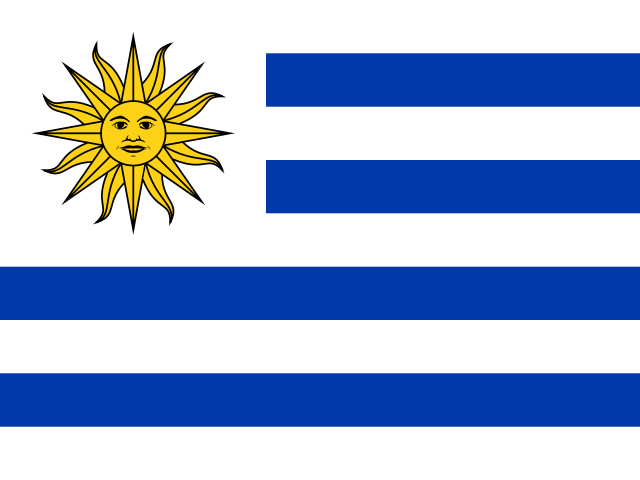
UruguaySun in the corner
Finland shares the blue and white palette and also uses a cross. Its blue Nordic cross spans the full white field, with the upright shifted toward the pole. Greece keeps its white cross in a blue corner square and fills the rest of the flag with stripes. Trace the horizontal arms of the cross to see where they stop.
Uruguay is a closer match in overall structure. It combines nine stripes with a symbol in the upper corner by the pole. Look for a golden sun on a white background in Uruguay’s corner and a white cross on blue in Greece’s. The stripe order gives a second clue: Uruguay starts and ends with white, while Greece starts and ends with blue. That check is handy if the corner is too small to see.