
Russia
Russia spans both sides of the Urals and extends through Siberia across northern Asia to the Pacific coast.
- Capital
- Moscow
- Region
- Eastern Europe
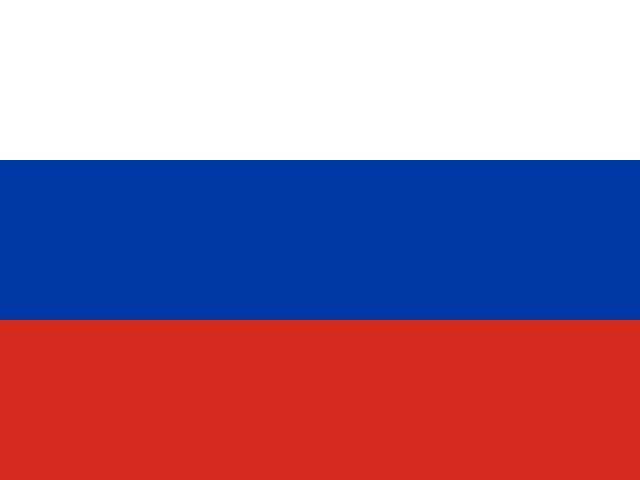
Flag of Russia
The white-blue-red tricolour dates back to the era of Peter the Great and was restored in 1991.
White–blue–red from top to bottom, with no shield. Slovakia and Slovenia both add a shield to that stripe order.
Languages and local life
Where the name comes from Russian lands were generally referred to as Muscovy until PETER I officially declared the Russian Empire in 1721; the new name sought to invoke the patrimony of the medieval eastern European Rus state centered on Kyiv in present-day Ukraine; the Rus were a Varangian (eastern Viking) elite that imposed their rule and eventually their name on their Slavic subjects.
Language profile Russian (official) 85.7%, Tatar 3.2%, Chechen 1%, other 10.1% (2010 est.).
Currency Russian ruble (RUB).
Borders and landscape
Area and borders Total area is about 17,098,242 km². It shares land borders with Azerbaijan, Belarus, China, Estonia, Finland, Georgia, Kazakhstan, North Korea, Latvia, Lithuania, Mongolia, Norway, Poland and Ukraine.
Landscape Broad plain with low hills west of Urals; vast coniferous forest and tundra in Siberia; uplands and mountains along southern border regions.
From high to low Highest point: Gora El'brus (highest point in Europe) 5,642 m. Lowest point: Caspian Sea -28 m.
A moment in its history
The event The Soviet Union was formally dissolved and ceased to exist as a sovereign state on 26 December 1991.
The wider story On 8 December, the Russian, Byelorussian and Ukrainian leaders signed the Belovezha Accords declaring that the Soviet Union no longer existed.
Reform and dissolution Gorbachev’s policies of glasnost and perestroika sought to change a stagnating system. The Soviet federal government ended with the dissolution in 1991.
A person connected to this country
What they contributed “for the discovery and synthesis of quantum dots”
The person Aleksey Yekimov , born in St. Petersburg, received the 2023 Nobel Prize in Chemistry.
Where they worked Nanocrystals Technology Inc. at the time of the award.
Where it is
On the map Russia spans both sides of the Urals and extends through Siberia across northern Asia to the Pacific coast.
Where people live Population is heavily concentrated in the westernmost fifth of the country extending from the Baltic Sea, south to the Caspian Sea, and eastward parallel to the Kazakh border; elsewhere, sizeable pockets are isolated and generally found in the south.