
Flag of Germany
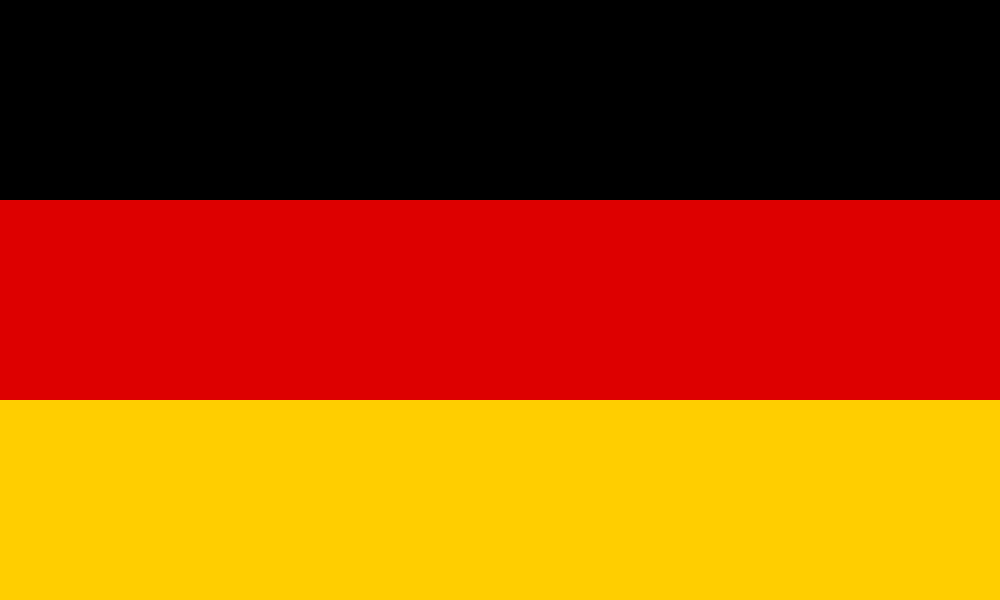
Germany’s national flag has three equal horizontal bands: black at the top, red in the middle and gold at the bottom. The same colours have marked very different chapters of German history.
- Height to width
- 3:5
- Federal colours in Basic Law
- 1949
Where black, red and gold came from
The colours were already associated with the movement for a united Germany in the early nineteenth century. The German Bundestag traces one strand of that history to the Lützow Free Corps, a volunteer force in the wars against Napoleon whose dark uniforms had red trim and brass buttons. At the Hambach Festival of 1832, participants carried black-red-gold flags as they called for political freedoms and national unity. The colours circulated widely during the revolutions of 1848 and 1849, and in 1848 both the Federal Diet and the Frankfurt National Assembly chose them for a united Germany.
That history helps explain why the three bands are usually interpreted together. Black, red and gold came to signify the movement for unity and freedom through their use at political gatherings and in public life. Assigning a separate virtue or episode to each stripe misses the connection among the colours as a group. The gold band is also worth naming accurately: it looks yellow in most illustrations and on most fabric flags, while the constitutional colour is gold.
How the tricolour returned
The German Empire used black, white and red. In 1919 the Weimar National Assembly returned to black, red and gold as the colours of the republic, although the change was contested and a compromise kept elements of the older design in the merchant ensign. When West Germany adopted its Basic Law in 1949, Article 22 again established black, red and gold as the federal colours.
East Germany initially used the same tricolour. In 1959 it added an emblem with a hammer, compasses and a wreath of grain. That makes the centre of the flag a practical dating clue in photographs from the divided-Germany era. From reunification on 3 October 1990, the plain black, red and gold federal flag represented the reunified country.
Germany, Belgium and other tricolours
-
GermanyBlack, red and gold bands 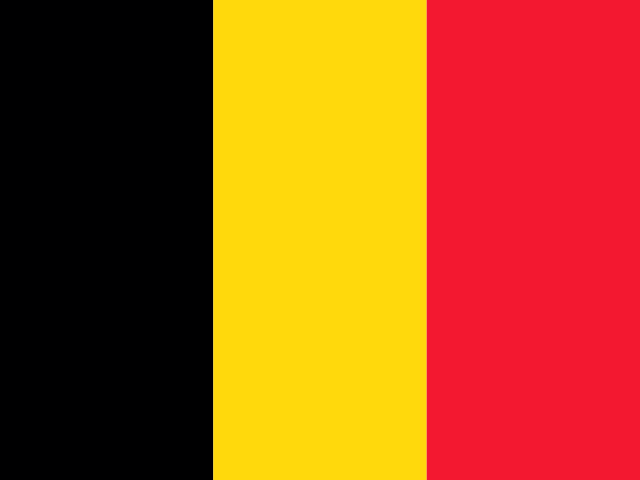
BelgiumVertical bands 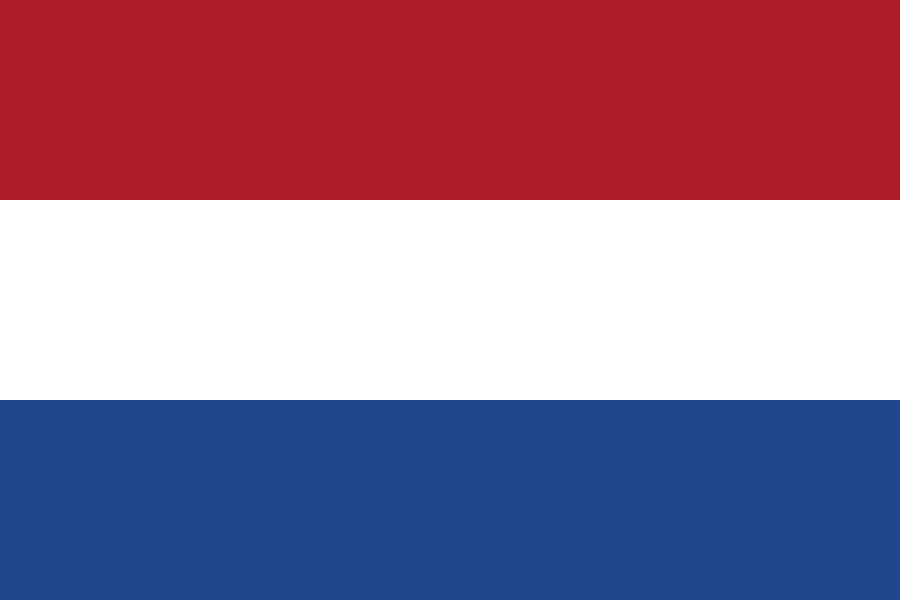
NetherlandsWhite middle band
Belgium uses a closely related palette, but its bands are vertical. With the pole on the left, Belgium reads black, yellow, red across the flag. Germany reads black, red, gold down the flag. Start with the direction of the bands, then confirm that the red is in the middle. This works even when shadows make gold and yellow look nearly identical.
The Dutch flag gives you a different comparison. It also has three equal horizontal bands with no central emblem, but its white band sits between red above and blue below. If several plain tricolours appear in a quiz, name the top and middle bands before looking at the choices. For Germany, black above red is the quick check. A historical black-white-red flag requires the same attention to the middle stripe.